|
Demography and population dynamics of resilience and restoration
Changing climate coupled with increasingly prevalent disturbances (e.g. wildfire) are expected to fundamentally restructure plant communities. Our research seeks to understand how demographic processes and environmental conditions influence the recovery of plant populations and communities from disturbance, and use this knowledge to anticipate where populations may be most vulnerable. Current projects focus on understanding the resilience of shrublands (sagebrush) and woodlands (pinyon pine, juniper) in the Great Basin and Southwest US. |
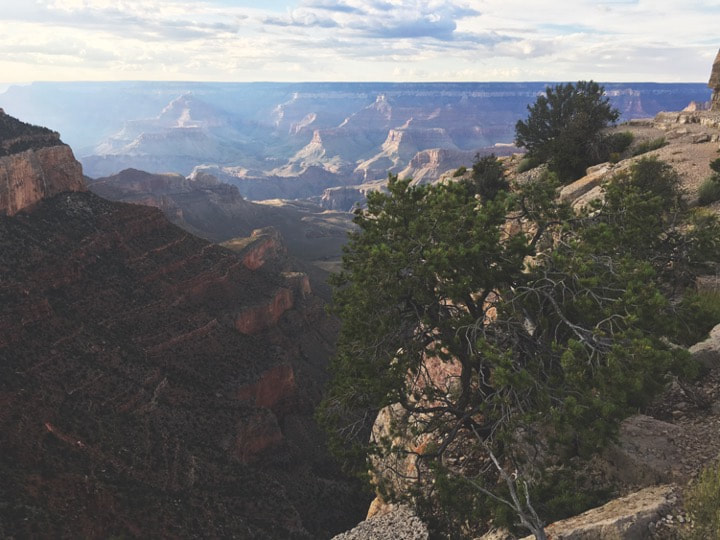
Pinyon pine (Pinus edulis) on the south rim of the Grand Canyon, AZ.
|
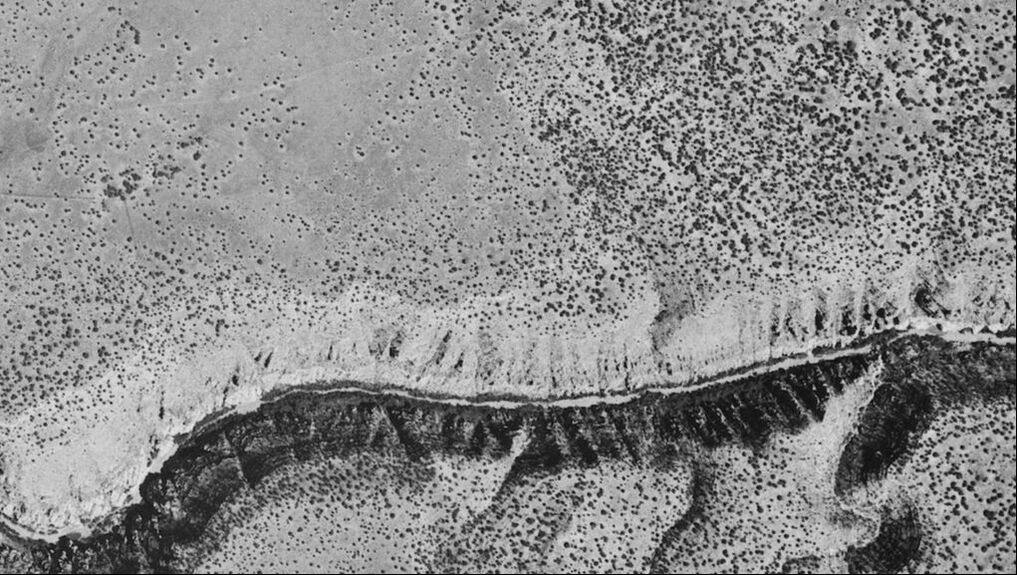
Aerial imagery of juniper (Juniperus osteosperma) in AZ.
|
Scaling inference for demographic models
Modern inference approaches have opened up exciting opportunities to link mechanistic population models with diverse datasets. A common focus of our research has been developing demographic and population modeling frameworks to link models with data across spatial and temporal scales to understand the drivers of plant distributions and abundance. |
|
Restoration of dryland ecosystems
The increasing extent and frequency of wildfires in the Great Basin have lead to dramatic declines in big sagebrush habitat. One of the more applied focuses of our work has been investigating the environmental and demographic controls on sagebrush restoration. We use this information to try to help inform more effective strategies for sagebrush recovery. |
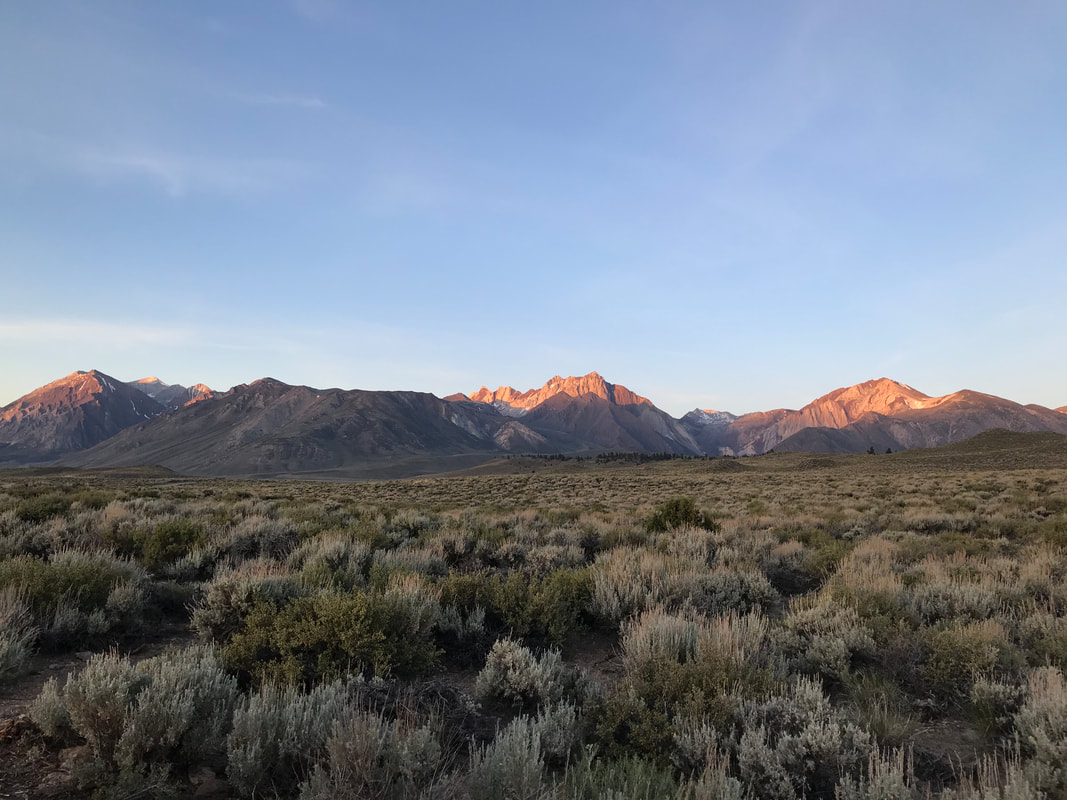
Sagebrush steppe community south of Reno near Benton, CA.
|
|
Plant responses to environmental variability
A central focus of our research has been linking the spatiotemporal dynamics of plants to environmental variability. Projects have varied in scale from explaining sub-annual, individual demographic rates to ecosystem level productivity across regions and decades. Most of this work has focused on herbaceous plant communities in North American rangelands and deserts (Chihuahuan and Sonoran) |
|
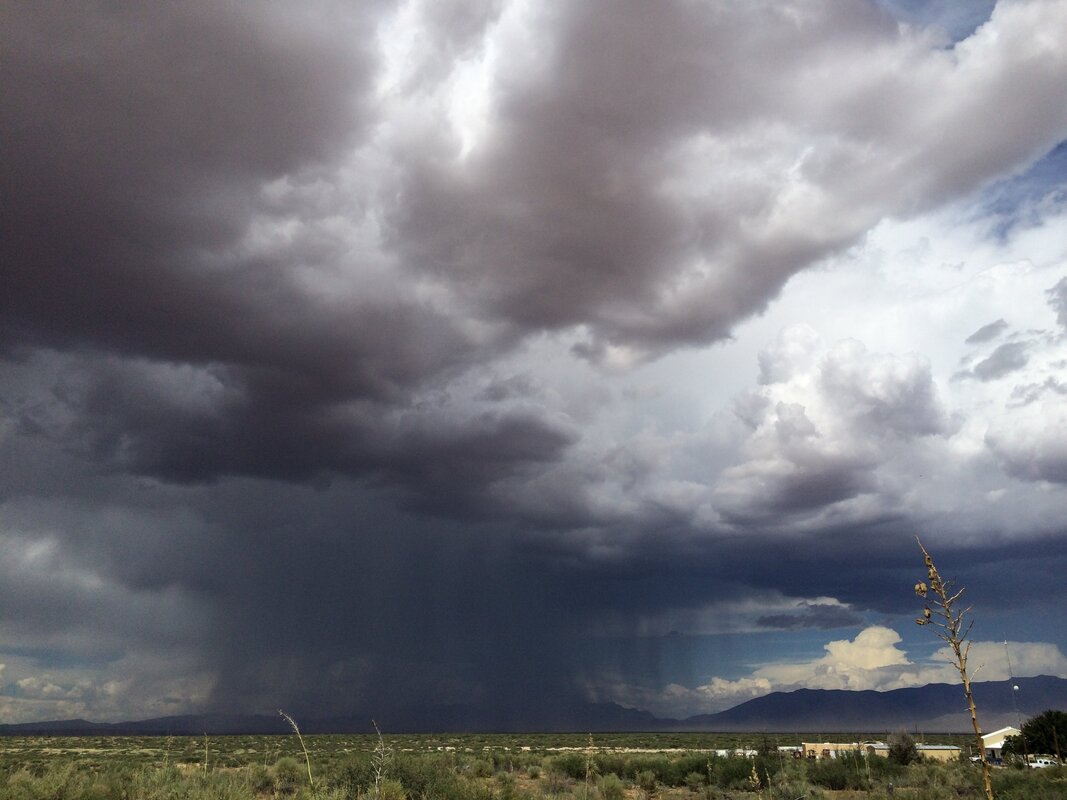
Monsoon storm in the Chihuahuan Desert of southern New Mexico
|
